Introduction
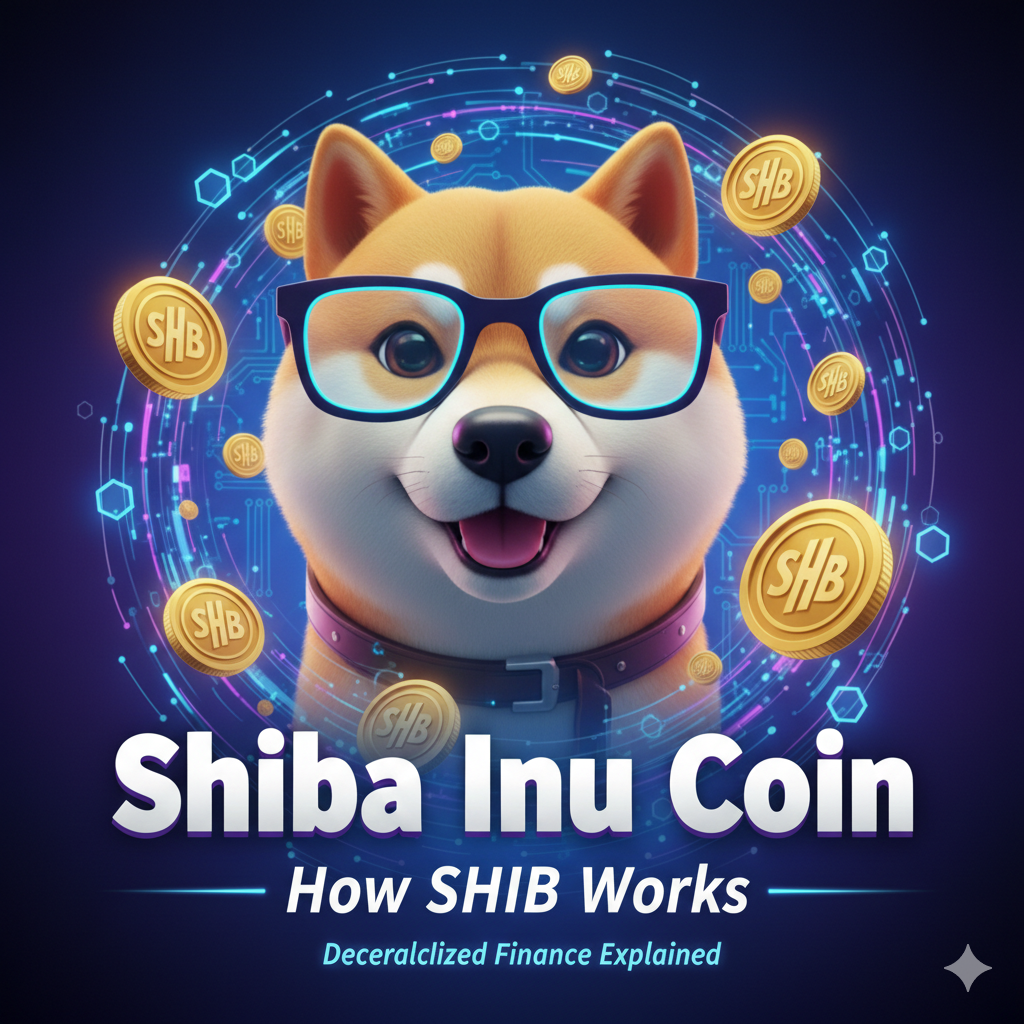
Shiba Inu Coin clearly and honestly for beginners: Shiba Inu Coin, commonly known as SHIB, began as a playful experiment inspired by internet meme culture. Over time, it has evolved into one of the most discussed and widely held cryptocurrencies in the world. What started as a community-driven token has expanded into a multi-layered ecosystem that includes decentralized finance tools, a layer-2 blockchain, NFTs, games, and a growing number of real-world applications.
For many beginners, SHIB is confusing. Some see it only as a speculative meme coin, while others believe it could become a serious digital asset with long-term value. The truth lies somewhere in between. Understanding Shiba Inu Coin properly requires looking beyond price charts and social media hype and instead focusing on how the project works, what problems it aims to solve, and how people actually use it today.
This guide explains Shiba Inu Coin in clear, simple language. It covers how SHIB works, the full ecosystem behind it, realistic earning and usage opportunities, risks to watch out for, and how SHIB might fit into a long-term strategy. Whether you are completely new or already holding SHIB, this article will help you make informed decisions based on facts rather than emotions.
What Is Shiba Inu Coin? (Shiba Inu Coin)
Shiba Inu Coin is an Ethereum-based cryptocurrency launched in August 2020. It operates as an ERC-20 token, meaning it runs on the Ethereum blockchain and benefits from Ethereum’s security, decentralization, and compatibility with thousands of wallets and applications.
Unlike traditional companies or centrally managed crypto projects, Shiba Inu was introduced as a decentralized experiment. There was no public fundraising, no venture capital backing, and no promised roadmap at launch. Instead, the project relied on community participation and organic growth.
The core idea behind SHIB was simple: create a fully decentralized token that anyone could own and use, while allowing the community to shape its future direction. Over time, this idea expanded into a broader ecosystem that now includes multiple tokens, platforms, and utilities.
How Shiba Inu Coin Works
Understanding how Shiba Inu Coin works is essential if you want to evaluate its real potential beyond price speculation. While SHIB may look simple on the surface, the way it operates combines standard blockchain mechanics with ecosystem-specific innovations.
At its foundation, SHIB is an ERC-20 token built on the Ethereum blockchain. This means every SHIB transaction follows Ethereum’s rules and is validated by Ethereum’s decentralized network of nodes. When you send SHIB from one wallet to another, that transaction is recorded on Ethereum’s public ledger, making it transparent, immutable, and secure.
Unlike traditional currencies or proof-of-work cryptocurrencies such as Bitcoin, SHIB is not mined. The entire supply was created at the time of launch. Because there is no ongoing mining or inflation, SHIB’s supply is fixed unless tokens are permanently removed from circulation through burns. This design choice places more emphasis on demand, utility, and ecosystem growth rather than inflation-based rewards.
SHIB transactions require gas fees, which are paid in ETH when operating directly on Ethereum. During times of high network activity, these fees can become expensive, limiting SHIB’s usability for small transactions. This challenge is not unique to SHIB but affects all Ethereum-based tokens.
To address this limitation, the Shiba Inu ecosystem introduced Shibarium, a layer-2 scaling solution. Shibarium processes transactions off the Ethereum mainnet and then settles them in batches. This dramatically reduces transaction costs and improves speed while still inheriting Ethereum’s security. As a result, SHIB becomes more practical for everyday use cases such as gaming, microtransactions, and decentralized applications.
Another important aspect of how SHIB works is its connection to smart contracts. Smart contracts enable automated actions without intermediaries. Through these contracts, SHIB can be staked, swapped, burned, or integrated into applications without requiring trust in a central authority. This is what allows platforms like ShibaSwap and SHIB-based games to function autonomously.
Token burns also play a role in SHIB’s mechanics. Certain transactions within the ecosystem automatically route a portion of fees toward burn addresses. Once burned, those tokens are permanently removed from circulation. While burns do not guarantee price increases, they gradually reduce supply, which can support long-term value if usage and demand continue to grow.
In simple terms, SHIB works by combining Ethereum’s security, community-driven adoption, smart contract automation, and layer-2 scalability. The token itself is only one piece of a larger system designed to evolve over time. Understanding these mechanics helps users see SHIB not just as a speculative asset, but as a functional component of a growing decentralized ecosystem.
The Shiba Inu Ecosystem Explained in Detail
The strength of Shiba Inu Coin lies in its ecosystem. Rather than relying on a single token with limited functionality, the project has built an interconnected set of tools, platforms, and assets designed to support long-term use and growth.
Below is a detailed explanation of each major component.
1. SHIB Token – The Foundation of the Ecosystem
The SHIB token is the primary currency within the Shiba Inu ecosystem. It is the most widely held and traded asset associated with the project.
SHIB is used for peer-to-peer transactions, payments, trading, and participation in ecosystem platforms. Because it is listed on most major centralized exchanges, it is easy for beginners to buy, sell, and hold.
From a value perspective, SHIB’s price is influenced by overall market sentiment, adoption, ecosystem activity, and token supply reduction through burns. While the supply is very large, ongoing burn mechanisms aim to gradually reduce circulating tokens over time.
SHIB is best suited for users who want basic exposure to the ecosystem or who plan to use SHIB for payments, transfers, or long-term holding.
2. ShibaSwap – Decentralized Exchange and DeFi Hub
ShibaSwap is the official decentralized exchange built for the Shiba Inu ecosystem. It allows users to swap tokens directly from their wallets without relying on centralized intermediaries.
Users can also provide liquidity to pools, stake tokens, and earn rewards. These rewards vary depending on network activity, liquidity demand, and market conditions.
ShibaSwap plays a critical role in decentralizing control and giving users full ownership of their assets. However, it requires users to understand basic DeFi concepts such as wallet security, transaction fees, and smart contract risks.
3. Shibarium – Layer-2 Blockchain Infrastructure
Shibarium is one of the most important developments in the Shiba Inu ecosystem. It is a layer-2 blockchain designed to process transactions more efficiently than Ethereum mainnet.
By handling transactions off-chain and settling them efficiently, Shibarium reduces fees and increases transaction speed. This makes SHIB-based applications more practical for everyday use.
Shibarium also enables automatic token burns, meaning that some transaction fees contribute to reducing SHIB’s supply. Over time, this could support long-term value if ecosystem usage grows.
4. BONE – Governance and Utility Token
BONE is the governance token of the Shiba Inu ecosystem and the gas token for Shibarium.
Holding BONE allows users to participate in governance decisions, such as voting on proposals related to ecosystem development. It is also required to pay transaction fees on the Shibarium network.
Because BONE has a much smaller supply than SHIB, it plays a different role and appeals more to users interested in infrastructure and governance rather than mass adoption.
5. LEASH – Scarcity-Based Ecosystem Token
LEASH is a limited-supply token within the Shiba Inu ecosystem. It was originally designed with a rebasing mechanism but later transitioned to a fixed supply model.
LEASH often provides exclusive benefits such as early access to ecosystem features or special opportunities. Due to its low supply, it is more volatile and carries higher risk.
LEASH is generally better suited for advanced users who understand market cycles and volatility.
6. Wallets for SHIB Storage and Use
To fully participate in the Shiba Inu ecosystem, users need a compatible crypto wallet. Wallets allow users to store SHIB securely, interact with decentralized applications, and maintain control over private keys.
Non-custodial wallets give users full ownership but also full responsibility. Losing private keys means losing access permanently. Proper security practices are essential.
7. Centralized Exchanges and Liquidity
Centralized exchanges play a major role in SHIB’s accessibility. They allow beginners to purchase SHIB using fiat currency and provide high liquidity for trading.
While convenient, centralized platforms require users to trust the exchange with custody of their funds. Long-term holders often move assets to private wallets for added security.
8. Token Burn Mechanisms
Token burning permanently removes SHIB from circulation. Burns occur through ecosystem activity, transaction fees on Shibarium, and community-driven initiatives.
Although burns do not guarantee price increases, they reduce supply over time, which can support value if demand remains strong or grows.
9. SHIB Metaverse
The SHIB Metaverse is a virtual environment where users can buy digital land, build experiences, and interact with others.
This initiative aims to expand SHIB beyond finance into digital ownership and online experiences. While still in development, it represents a long-term vision for ecosystem growth.
10. SHIB Games and Entertainment
Blockchain-based games within the SHIB ecosystem allow users to interact with tokens in entertainment-focused ways.
These games introduce SHIB to non-technical users and help drive adoption through engagement rather than speculation.
Mid-Article CTA: SHIB Safety and Usage Checklist
Before using any SHIB platform, users should understand wallet security, transaction fees, smart contract risks, and how to verify official ecosystem tools. Education is the strongest form of protection in crypto.
How to Choose the Right SHIB Tools
Choosing the right tools depends on experience level, risk tolerance, and goals. Beginners may prefer exchanges and simple wallets, while advanced users may explore DeFi, governance, and development tools.
Time, Risk, and Potential Value Breakdown
Holding SHIB requires minimal time but exposes users to market volatility. DeFi participation requires more effort and knowledge but may offer additional rewards. Development and ecosystem building require the most effort but provide the greatest long-term opportunities.
Legitimacy and Scam Awareness
Shiba Inu is a legitimate project, but scams exist around it. Users should be cautious of fake websites, impersonation accounts, and guaranteed profit claims.
Verifying official channels and smart contract addresses is essential.
Income Diversification and Risk Management
Relying on a single token or platform increases risk. A diversified approach that includes multiple assets and strategies can help manage volatility and uncertainty.
Long-Term Strategy: From Holding Tokens to Building Value
Long-term success in crypto often comes from learning, building, and contributing rather than passive holding alone. The SHIB ecosystem provides opportunities for developers, creators, and educators to participate in meaningful ways.
Frequently Asked Questions
Q.1. Is Shiba Inu Coin only a meme coin?
It started as a meme-inspired project but has grown into a full ecosystem with real utility.
Q.2. Does SHIB have real-world use cases?
Yes, including payments, decentralized finance, gaming, and digital ownership.
Q.3. Is SHIB a safe investment?
No crypto investment is risk-free. SHIB carries volatility and market risk.
Q.4. What role does Shibarium play?
Shibarium improves scalability, reduces fees, and enables ecosystem growth.
Q.5. Can beginners use SHIB safely?
Yes, with proper education and security practices.
Conclusion
Shiba Inu Coin represents how community-driven projects can evolve beyond their origins. While it carries risks and uncertainties, it also demonstrates innovation, adaptability, and strong user engagement.
Understanding how SHIB works, its ecosystem tools, and its long-term vision is essential before making decisions. Education, patience, and responsible participation matter far more than short-term speculation.
For those willing to learn and engage thoughtfully, SHIB offers more than hype. It offers a case study in decentralized growth and community-powered development.